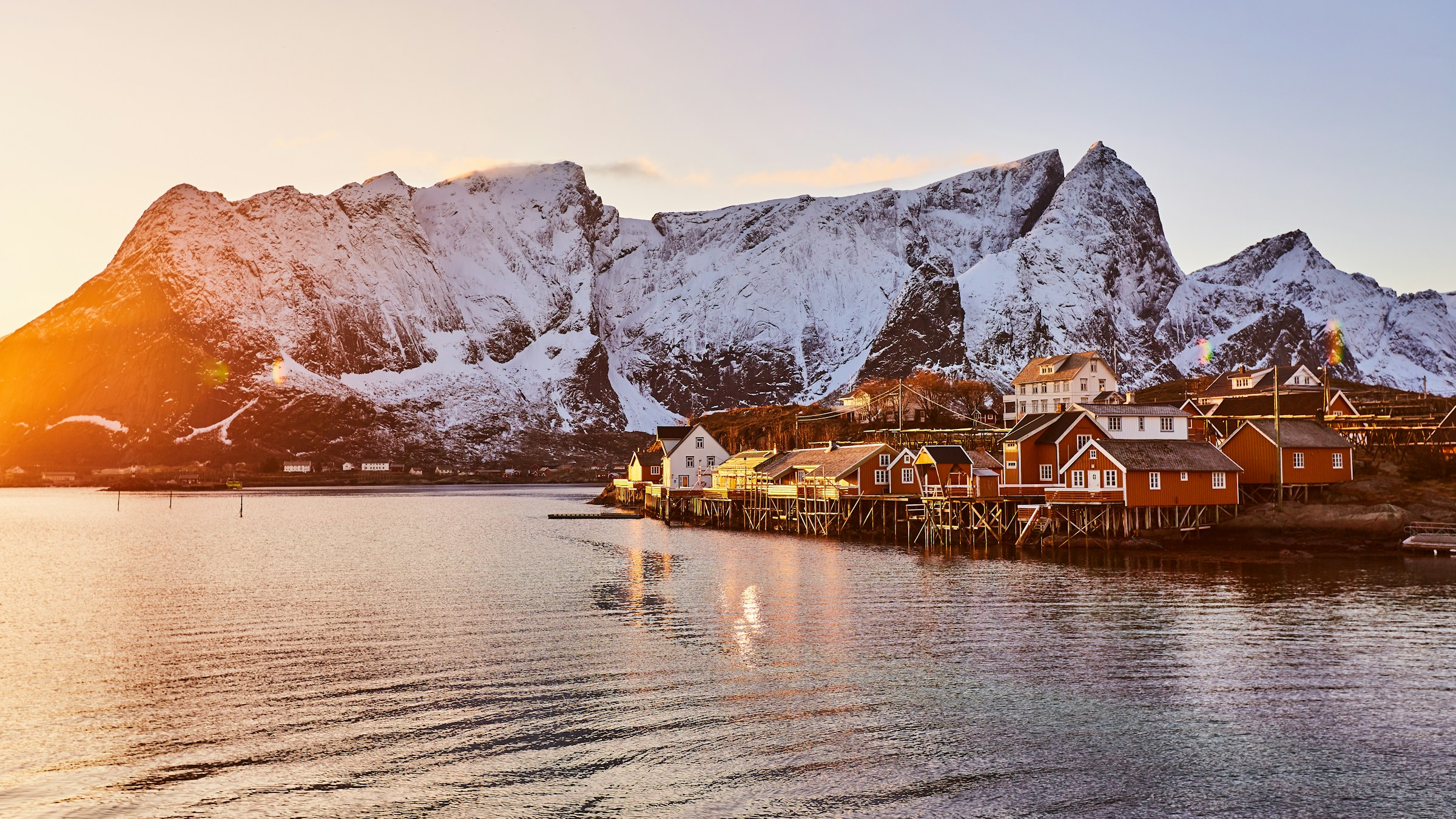
Reine and Hamnøy
the classic red-cabin-and-peak postcard view
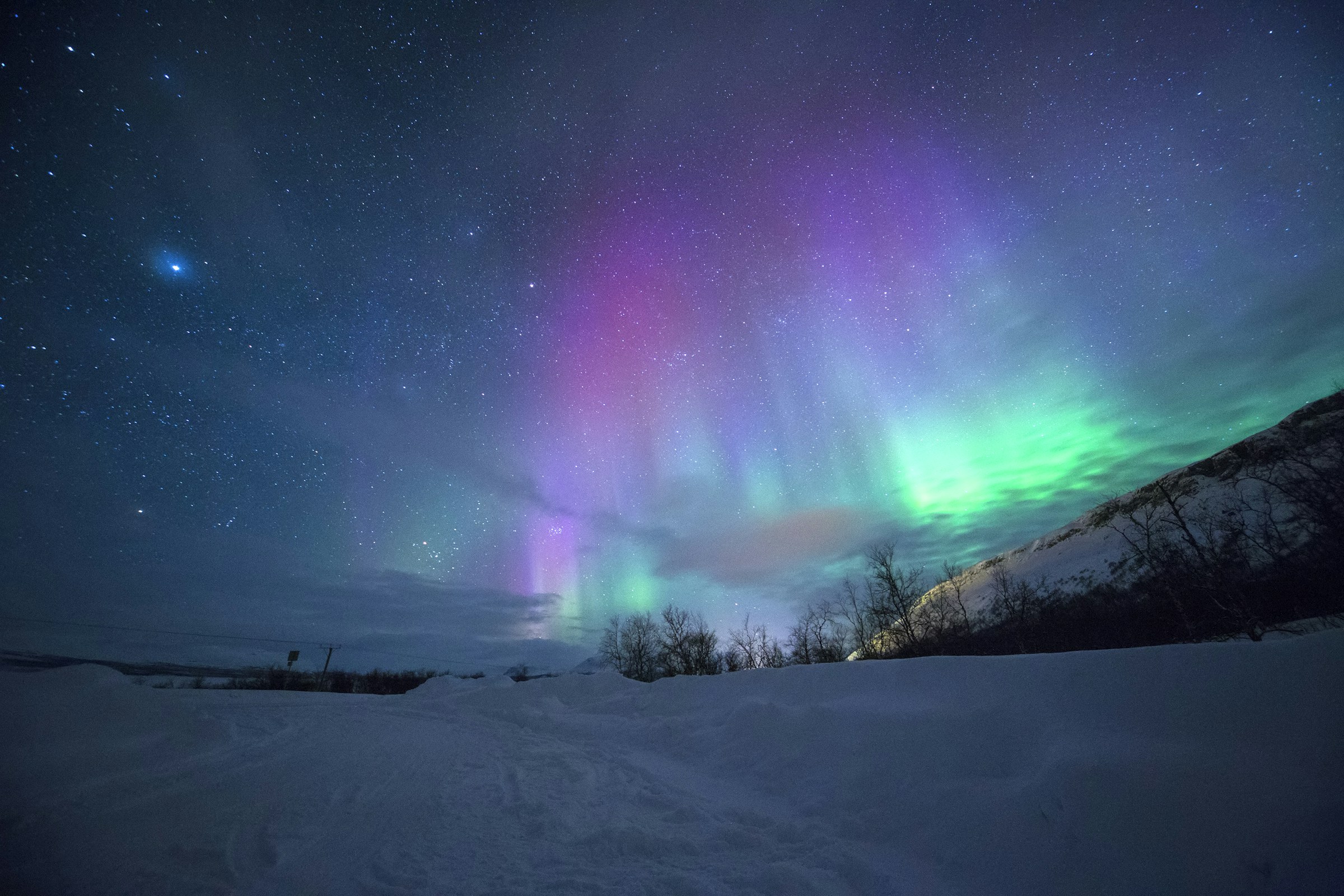
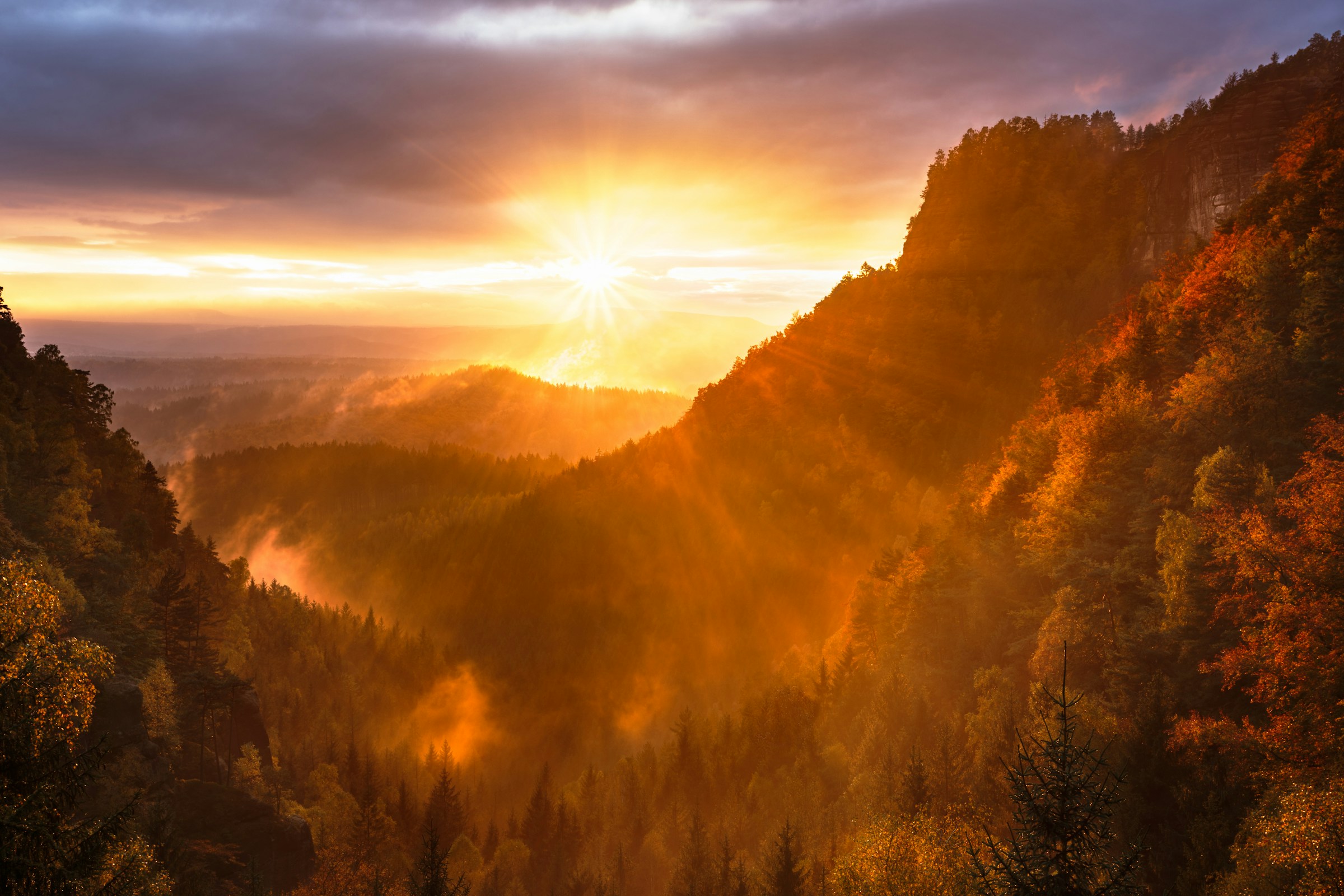
The Lofoten Islands are an archipelago strung off Norway's coast, well above the Arctic Circle, where jagged granite peaks plunge straight into turquoise fjords and white-sand beaches that look tropical until you feel the water. Tiny fishing villages of red-painted rorbu cabins cling to the shoreline; in winter the northern lights ripple overhead, and in summer the midnight sun never sets. It is one of the most photographed places on earth and one of the great bucket-list trips for Indian travellers chasing the aurora — combining dramatic landscapes, cosy cabin stays, world-class hiking and a soft-adventure feel that works for couples, photographers and families alike. Despite the Arctic latitude, the Gulf Stream keeps it far milder than you'd expect.
Two completely different trips depending on season. For the northern lights, come September to early April — the skies are dark and the aurora is frequent on clear nights, with late winter (February–March) giving longer days for activities alongside good aurora odds; deep winter (December–January) is dark, cold and atmospheric but limits daylight. For hiking, beaches, and the midnight sun (which never sets from roughly late May to mid-July), come June to August, when days are endless, peaks are snow-free and everything is open. May and September are quieter shoulder months. You cannot reliably get both aurora and good hiking weather in the same trip — choose your priority.
the classic red-cabin-and-peak postcard view
the "Venice of Lofoten" and its cliff-edge football pitch
Via Bodø · BOO. Svolvær · SVJ also serves the islands.
Winter-tyred, included for the island roads.
90 days for most passports. We handle the paperwork.
Fully cashless — cards work literally everywhere.
Two-pin European, 230V. Adapters in every welcome kit.
Service included; round up only if delighted.