Erg Chebbi (Merzouga)
the towering, accessible dunes from Fes or Marrakech
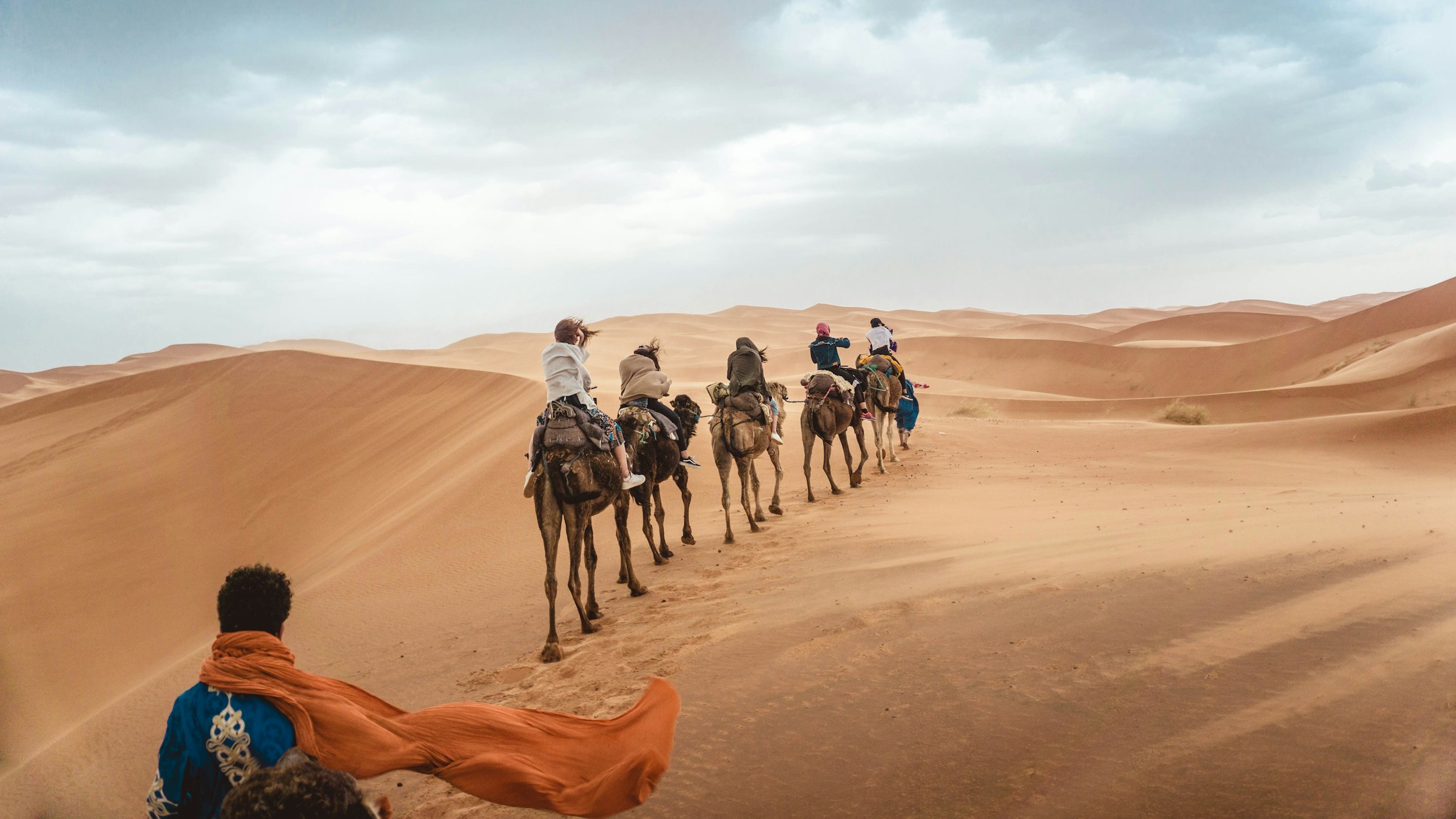
The Sahara is the planet's largest hot desert, and Morocco offers its most accessible and romantic edge. Beyond the Atlas Mountains, the tarmac runs out and the great sand seas begin: the towering orange dunes of Erg Chebbi near Merzouga, and the wilder, remoter Erg Chigaga out past Zagora. You arrive by camel or 4×4 as the light goes gold, sleep in a canvas camp ranging from simple to genuinely luxurious, eat tagine around a fire while Berber drummers play, and wake before dawn to climb a dune and watch the sun rise over an ocean of sand. It is one of the great two- or three-night add-ons to a Marrakech or Fes trip, and a bucket-list experience in its own right.
The desert season is October to April, when daytime temperatures are pleasant (often 20–28°C) and the nights are cool to cold — pack warm layers, as desert nights can drop near freezing in midwinter. October–November and March–April are the sweet spots: comfortable days and bearable nights. December–February brings beautiful clear light but genuinely cold nights. Avoid May to September, when daytime heat regularly tops 40°C and can be dangerous; camps and treks largely pause. Spring can bring occasional sandstorms (the chergui wind).
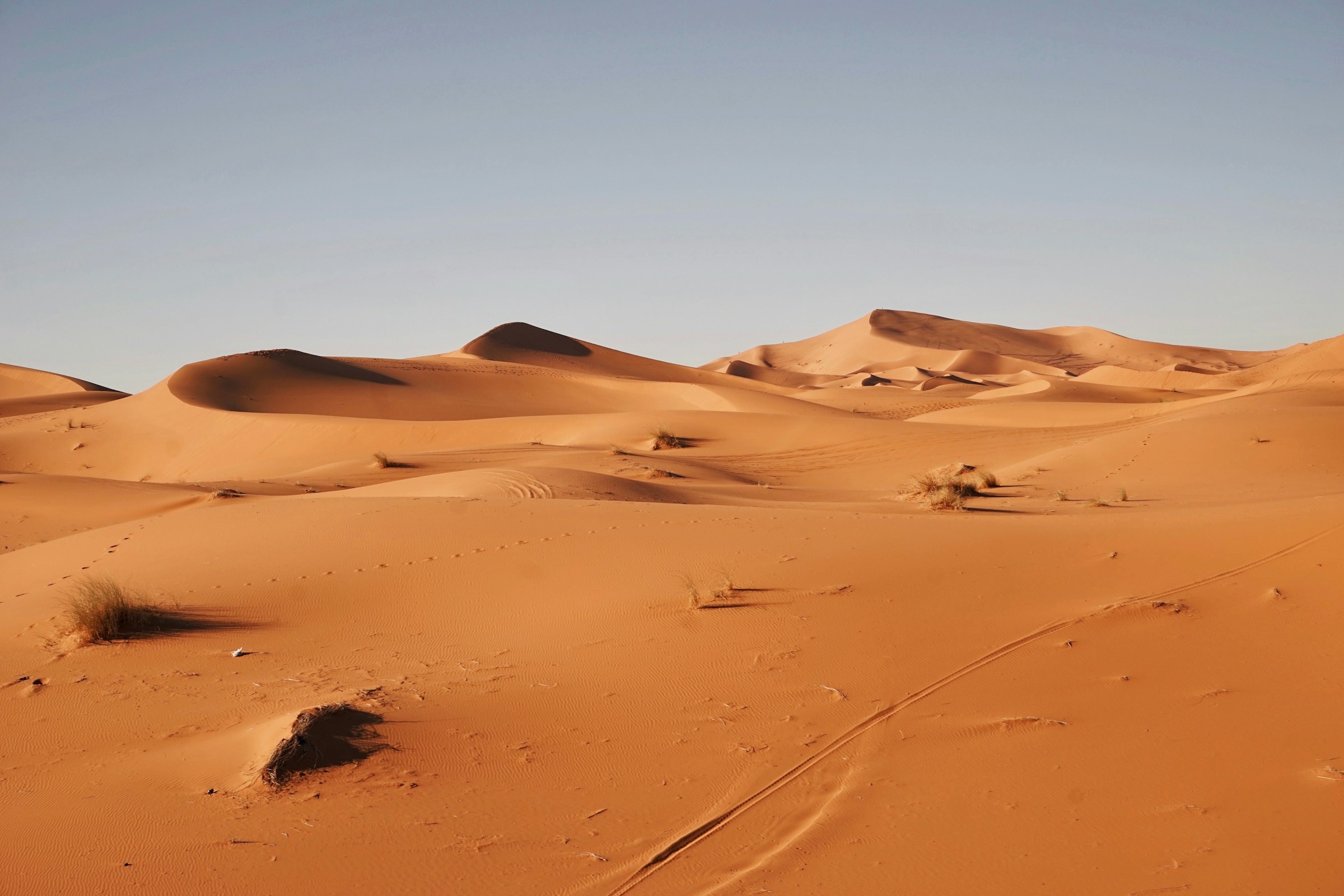
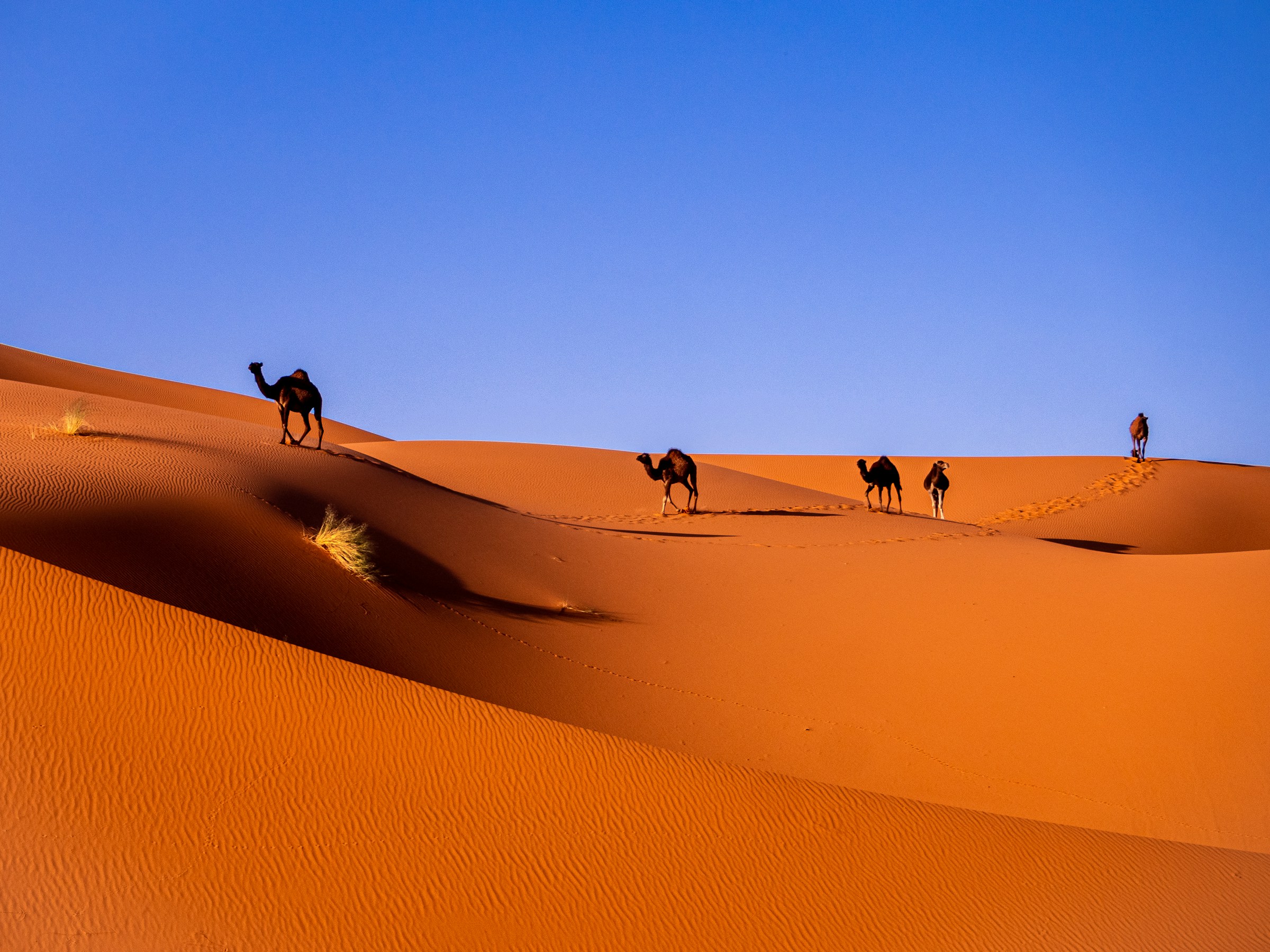
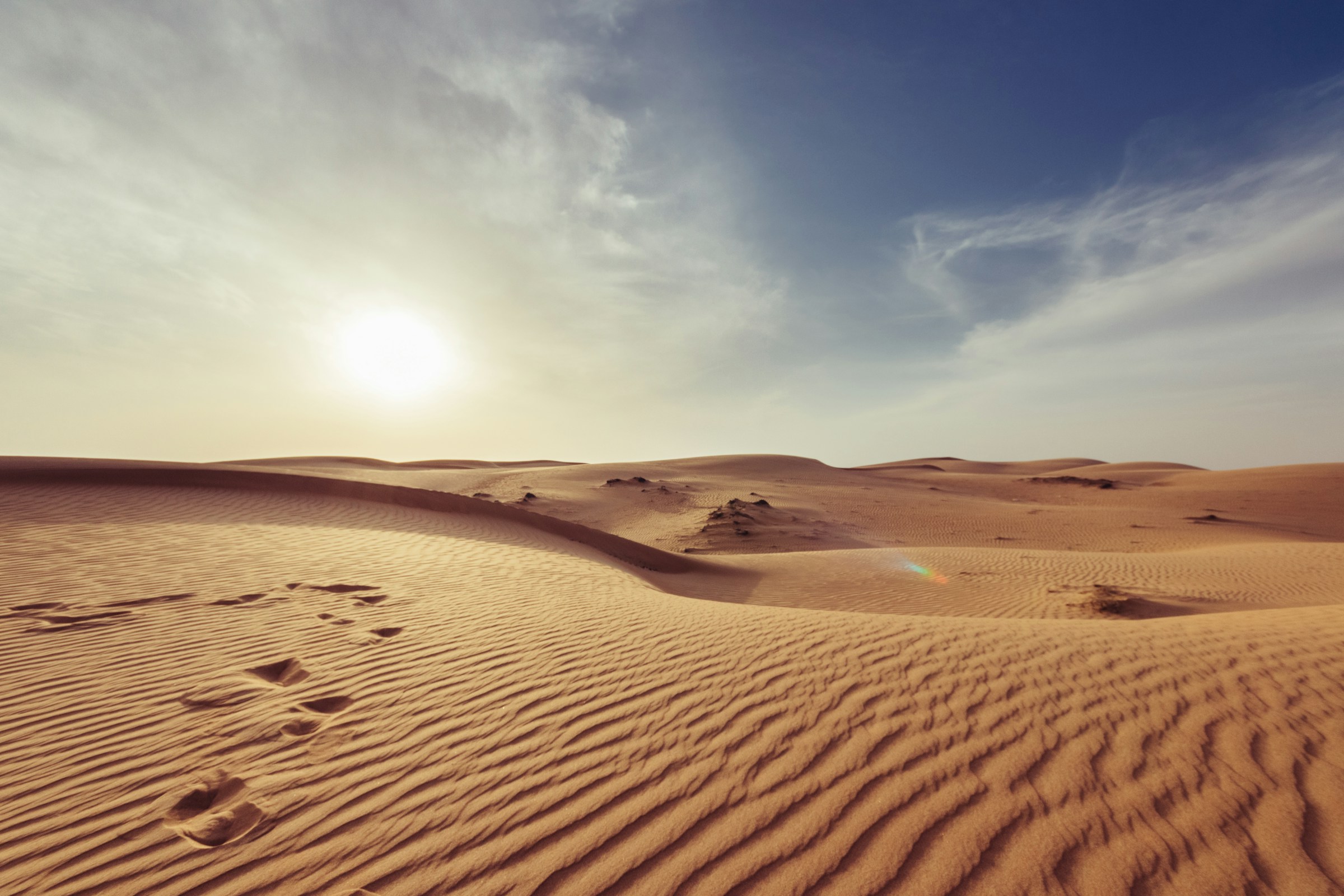
the towering, accessible dunes from Fes or Marrakech
wilder, remoter, fewer crowds
Gateway to the dunes; Errachidia for the deep desert.
Desert-ready 4x4, included from Marrakesh.
Morocco e-visa for Indians. We file it for you.
Cash country once you leave the cities — carry dirham.
Two-pin European, 220V. Adapters in every welcome kit.
Small tips for guides, camp crew and drivers.